

Construction and remodeling projects involve many moving parts. Even with careful planning, detailed estimates, and thorough preconstruction work, changes can arise after construction begins.
A construction change order is the formal process used to document a change to the original agreed scope of work. It should clearly identify what is changing and, when applicable, explain how that change affects the project cost and schedule.
Changes may be requested by the owner, required because of design or field conditions, or triggered by an unforeseen condition that could not reasonably be confirmed before construction began.
At Transparent Construction LLC, changes are documented in writing through the change-order process. Whenever practical, the client reviews and approves the change before additional work proceeds. The goal is to give clients clear supporting information and an opportunity to understand the decision rather than receiving unexplained additional charges.
Understanding why change orders happen and how they should be managed can help homeowners make more informed decisions throughout a remodeling or construction project.
What Is a Construction Change Order?
A construction change order is a written modification to the scope established in the original construction contract.
Depending on the situation, it may add work, remove work, revise materials or specifications, address a newly discovered condition, or otherwise modify what the contractor originally agreed to complete.
A properly documented change order should answer several basic questions:
- What is changing?
- Why is the change necessary or being requested?
- What work will be added, removed, or modified?
- Does the change affect the project cost?
- Does it affect the construction schedule?
- Has the client reviewed and approved the change when approval is practical before proceeding?
This documentation creates a clearer record for both the property owner and contractor and helps keep the scope, cost, schedule, and decisions aligned as construction progresses.
Why Do Construction Change Orders Happen?
Not every change order means something went wrong.
Construction projects develop from plans, estimates, existing information, site observations, and assumptions made before work begins. Remodeling presents an additional challenge because portions of the existing building may remain concealed until demolition or construction exposes them.
Several circumstances can lead to a construction change order.
Owner-Requested Changes
A homeowner may decide to change part of the project after the construction contract has been established.
For example, the owner may request a different material, expand the scope of a room, add work that was not included originally, or revise a previously selected feature.
Even when the requested change appears relatively small, it may affect labor, materials, subcontractor coordination, procurement, or sequencing. Those effects should be evaluated before the change is incorporated into the project.
Design or Scope Revisions
A project may also require clarification or modification of the original design or scope as construction progresses.
When a revision changes the work defined in the contract, documenting that revision through the change-order process helps everyone understand what is different from the original agreement.
Unforeseen Conditions
Unforeseen conditions are existing conditions that could not reasonably be confirmed before construction began.
They may include:
- Concealed water damage
- Rot or deterioration
- Outdated or concealed wiring
- Hidden plumbing problems
- Structural deficiencies
- Hazardous materials
- Undocumented previous construction work
These conditions can be particularly relevant during remodeling because walls, floors, ceilings, and other finished assemblies may prevent a contractor from seeing the complete condition of the building during estimating and preconstruction.
Transparent Construction LLC identifies these types of concealed issues as potential unforeseen conditions and addresses their cost and schedule effects separately when they were not specifically included in the original scope.
Structural, electrical, environmental, or other specialized conditions may also require evaluation by the appropriate qualified professional or authority before the correct response can be determined.

Can Unforeseen Conditions Be Eliminated Before Construction?
Not always.
Good planning can reduce uncertainty, but it cannot necessarily reveal everything hidden inside an existing building.
Preconstruction investigation, site visits, available drawings, inspections, engineering when required, and discussions about known conditions can help identify risks before work begins. However, there is an important difference between a condition that can reasonably be evaluated in advance and something concealed behind existing construction.
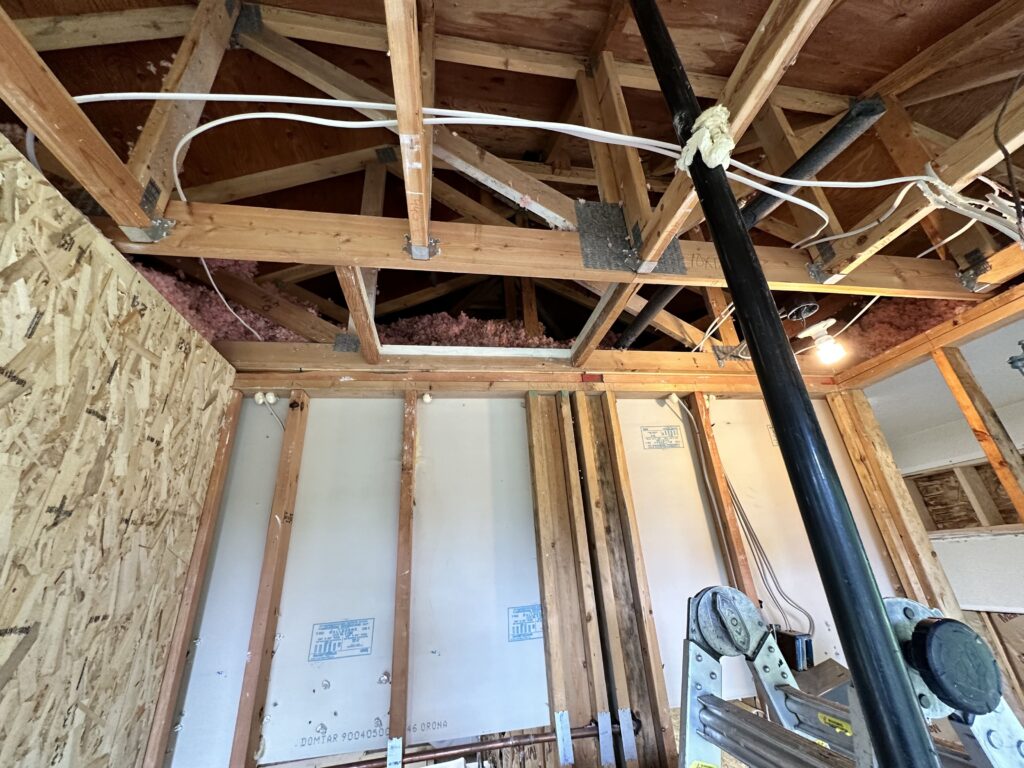
For example, the extent of deterioration behind a finished wall may not become clear until that wall is opened.
This is why homeowners should be cautious of the expectation that every potential issue can be identified before a remodeling project starts.
A more practical approach is to identify known risks during planning and establish a clear process for addressing additional conditions if they are discovered.
How Unforeseen Conditions Can Affect Cost and Schedule
When additional work is necessary, it can affect more than the immediate repair.
A newly discovered condition may require investigation, additional labor or materials, specialty subcontractors, revised sequencing, or evaluation by an architect, engineer, environmental professional, inspector, or other qualified party when appropriate.
The schedule can also be affected.
For example, work in one area may need to stop temporarily while the condition is evaluated. Additional materials may need to be ordered, or another trade may need to complete work before the original sequence can resume.
Transparent Construction’s published guidance notes that remodeling schedules can be affected by concealed conditions discovered after existing construction is opened. It also identifies approved changes as one of the variables that can influence project schedules.
For this reason, a change order should address not only additional cost when applicable but also any known effect on the schedule.
What a Transparent Change-Order Process Should Look Like
Effective construction project management requires changes to be handled systematically rather than informally.
While the exact process depends on the project and construction contract, homeowners should generally expect the following steps.
1. Identify the Change or Condition
The contractor identifies the requested change or newly discovered condition and determines what information is needed before proceeding.
If something unexpected is uncovered, this may include documenting the condition and determining whether additional professional evaluation is necessary.
2. Define the Revised Scope
The next step is determining what work needs to change.
A written change order should describe the revised scope clearly enough that the homeowner understands how it differs from the original agreement.
3. Evaluate Cost and Schedule Effects
When applicable, the contractor evaluates how the revised scope may affect labor, materials, subcontractors, project management, sequencing, and schedule.
The objective is to give the client enough information to understand the practical effect of the decision.
4. Document the Change in Writing
Verbal conversations are useful during construction, but important scope and cost decisions should ultimately be documented.
Transparent Construction LLC’s process uses written change orders identifying the revised scope and, when applicable, its effect on cost and schedule.
5. Review and Approve the Change
Whenever practical, the client should have an opportunity to review and approve the change before the additional work proceeds.
There can be exceptions. Immediate action may occasionally be necessary to address a safety concern, prevent property damage, or comply with an inspection requirement. Transparent Construction LLC’s stated process is to communicate and document those circumstances as quickly as possible.
6. Update Project Documentation
Once approved, the change becomes part of the project’s working documentation.
Maintaining written records of decisions, approvals, risks, and cost changes can reduce confusion later in the project. Transparent Construction emphasizes written documentation and identifies clear communication around scope, schedule, decisions, and cost changes as part of its project-management approach.
What Should Homeowners Ask Before Approving a Change Order?
You do not need to be a construction expert to ask useful questions.
Before approving a construction change order, consider asking:
- Why is this change necessary?
- Was this work included in the original construction contract?
- What specifically will be added, removed, or modified?
- What is the cost impact?
- Could this change affect the schedule?
- Are there alternative approaches that should be considered?
- Does the condition require input from an architect, engineer, inspector, or another qualified professional?
- What happens to related work if the change is not made?
The purpose of these questions is not to make construction unnecessarily complicated. It is to make sure significant decisions are understood before they become part of the project.
Planning for Change Without Expecting Problems
A well-planned construction project should attempt to identify foreseeable risks before work starts.
Transparent Construction LLC states that its estimating approach is intended to establish realistic project budgets and that its estimates may identify scope, assumptions, exclusions, allowances, labor, materials, subcontractors, project management, and other applicable project costs.
However, detailed estimating should not be confused with a guarantee that conditions will never change.
For homeowners, a useful preconstruction conversation should include what is known about the existing property, what remains uncertain, what assumptions are being made, and how changes will be handled if new information becomes available.
That provides a stronger foundation for decision-making than simply assuming no changes will occur.
Clear Documentation Helps Keep Construction Decisions Understandable
Construction change orders are ultimately a project-management tool. They provide a structured way to address changes that arise after the original scope has been established.
For homeowners, the important question is not simply whether a project will ever experience a change. It is how potential changes will be communicated, evaluated, documented, and approved.
Transparent Construction LLC serves Tacoma, Gig Harbor, Bonney Lake, and surrounding areas and provides residential remodeling, new construction, commercial renovation, and construction-related consultation services. Its published approach emphasizes detailed pricing, upfront communication, collaboration, and transparency throughout the construction process.
If you are planning a remodeling or construction project and want to better understand how scope, estimates, schedules, and potential changes may be managed, contact Transparent Construction LLC to discuss your project and planning needs.
Frequently Asked Questions About Construction Change Orders
Are change orders normal in construction?
Changes can occur in both new construction and remodeling projects. They may result from owner requests, scope or design revisions, or unforeseen conditions. Their frequency depends on the individual project, which is why a clear written process is important.
Does every unforeseen condition require a change order?
Not necessarily. Whether additional documentation or cost is required depends on the original scope and construction contract. If the condition and associated work were already included, a separate change may not be necessary. If they were outside the agreed scope, the effects should generally be documented and reviewed.
Can a contractor know about hidden problems before construction?
Some risks can be identified during preconstruction, but concealed conditions cannot always be reasonably confirmed before demolition or construction begins. Existing walls, floors, ceilings, and previous construction can hide conditions that only become visible once work is underway.
Can a construction change order extend the project schedule?
Yes. Depending on the change, additional work can affect material procurement, inspections, subcontractor coordination, sequencing, or other activities. A written change order should identify known schedule effects when applicable.
Should I approve a change order before the work begins?
Whenever practical, reviewing and approving the revised scope, cost, and schedule effect before additional work proceeds provides greater clarity. Immediate action may sometimes be necessary for safety, property protection, or inspection-related circumstances, in which case communication and documentation should occur as quickly as possible.
How can homeowners reduce surprises during remodeling?
Thorough preconstruction planning can help. Review the scope, estimate, assumptions, exclusions, allowances, selections, known existing conditions, and change-order procedures before construction begins. Planning cannot expose every concealed condition, but it can clarify how uncertainty will be managed.
Ready to Start Your Next Project?
Whether you’re planning a renovation, repair, or new construction project, our team is here to help. Contact us today to discuss your project and learn how we can bring your vision to life.