Table of Contents
ToggleYes. Since February 1, 2025, Tacoma’s Home in Tacoma zoning allows accessory dwelling units (ADUs) in all zoning districts (City of Tacoma). Owner-occupant households earning up to 150% of Pierce County family median income can add up to two ADUs with extra flexibility on height, alley access, and tree credits, and the city offers pre-approved detached ADU plans to save time and money. Every ADU still needs a building permit and must meet Washington’s building and energy codes.
What is an ADU?
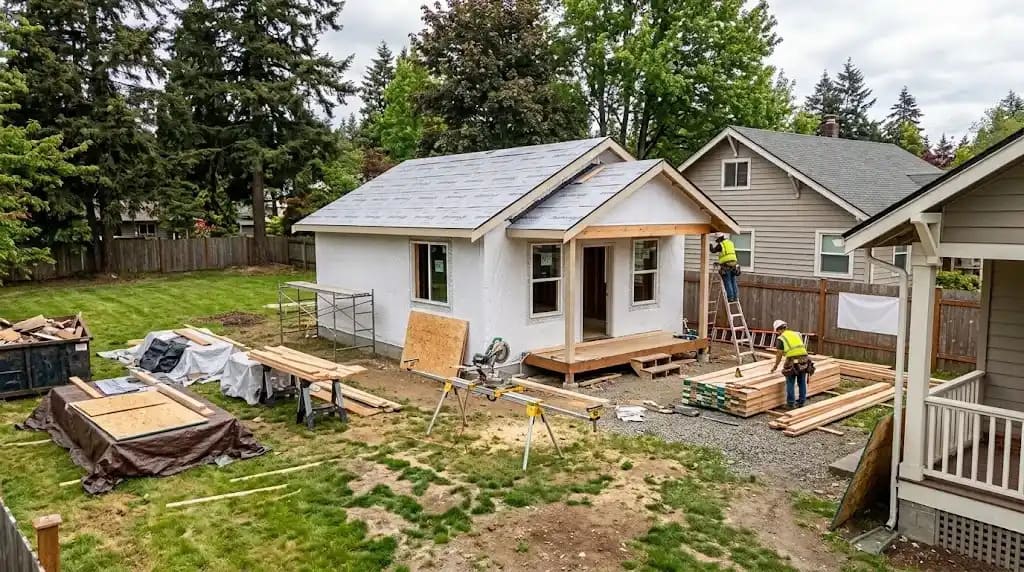
An accessory dwelling unit is a second, smaller home on the same lot as a main house, with its own living, sleeping, kitchen, and bathroom space. It can be detached (a backyard cottage), attached, or built inside an existing structure such as a basement or garage.
Owners build ADUs for rental income, family members, or aging in place. Because it is a full dwelling, an ADU is planned like new construction, with foundation, framing, utilities, and inspections.
What changed with Home in Tacoma?
Home in Tacoma replaced the city’s former single-family zoning with three Urban Residential zones (UR-1, UR-2, and UR-3) on February 1, 2025 (City of Tacoma). The change brings Tacoma into line with Washington’s middle housing law, House Bill 1110.
In its first year (February 2025 to January 2026), the city received 213 permit applications for 385 proposed units in the new zones, and single-family homes and ADUs remained the most common application types (City of Tacoma).
What ADU incentives does Tacoma offer?
Tacoma offers ADU incentives to current owner-occupant households earning no more than 150% of Pierce County family median income who add up to two ADUs on their property (City of Tacoma). In exchange, the owner records a title restriction keeping one unit owner-occupied for at least five years after occupancy.
The incentives include:- Height: the rear-yard height limit in UR-1 and UR-2 rises to 35 feet.
- Alley access: not required if the alley is undeveloped.
- Trees: on-site tree credit requirements drop to the minimum floor, without Tree Credit Fees or Canopy Loss Fees.
Does Tacoma have pre-approved ADU plans?
Yes. The City of Tacoma offers pre-approved detached ADU plans designed to streamline permitting and save time and money (City of Tacoma). Using one can reduce design cost and permit review time.
A pre-approved plan still has to fit your lot, utilities, and site conditions, so foundation, grading, and utility connections are priced separately. Ask your builder to check site fit before you commit to a plan.
Do I need a permit to build an ADU in Tacoma?
Yes. Every ADU needs a building permit from Tacoma Planning and Development Services, plus inspections at key stages. New ADUs must meet the 2021 Washington State Energy Code–Residential, effective statewide on March 15, 2024 (Washington State Building Code Council).
The City of Tacoma reports a median first review of about 3.6 weeks for residential new buildings, and correction cycles add time. See How Long Does a Design and Construction Project Take in Tacoma, WA? and When Can My Construction or Remodeling Project Start?
What affects the cost of an ADU?
ADU cost depends most on type (detached, attached, or conversion), size, site work, utility connections, and finishes. A garage or basement conversion reuses existing structure, while a detached ADU needs a new foundation, roof, and full utility runs.
Budget for design, permits, utility fees, and Washington sales tax, which contractors must collect on the full contract price for homeowner construction (Washington Department of Revenue); Tacoma’s combined rate is 10.4% as of April 1, 2026 (KIRO 7). Our guide What Should Be Included in a Construction or Remodeling Estimate? shows what a complete estimate lists.
Can I convert my garage or basement into an ADU?
Often, yes, if the space can meet code for ceiling height, egress, insulation, ventilation, and fire separation. Conversions can cost less than a detached unit but may reveal existing conditions such as moisture, low ceilings, or undersized electrical service.
A conversion is planned like residential remodeling, with an assessment of the existing structure first. For how hidden issues are priced, see What Homeowners Should Expect During Construction: Change Orders and Unforeseen Conditions.
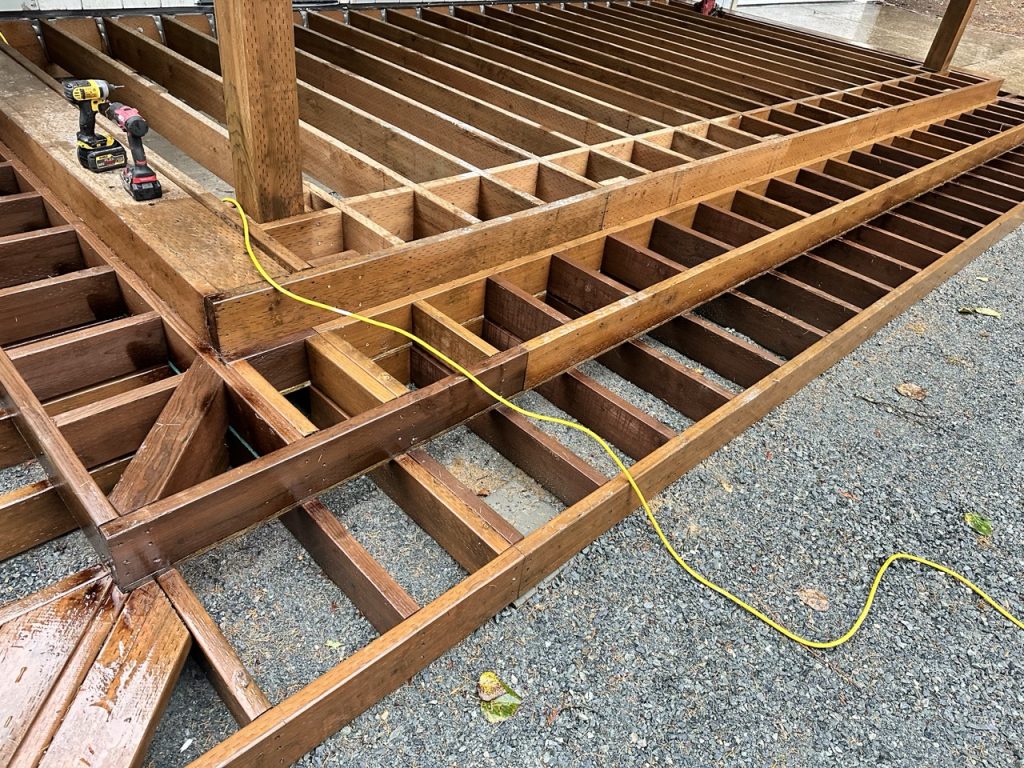
Detached ADU vs. attached ADU vs. conversion: how do they compare?
| Factor | Detached ADU | Attached ADU | Garage or basement conversion |
| Structure | New foundation, framing, roof | Ties into the main house | Reuses existing structure |
| Privacy | Highest | Moderate | Moderate |
| Utilities | New runs to the unit | Often shared or extended | Often extended from the house |
| Main cost risk | Site work and utility connections | Tie-in to existing roof and walls | Existing conditions and code upgrades |
| Pre-approved city plan | Available for detached units | Not applicable | Not applicable |
Ready to plan your Tacoma ADU?
Transparent Construction LLC builds ADUs, additions, and Custom Homes in Tacoma, Gig Harbor, and Bonney Lake. Our Pre-Construction Consulting can check site fit and budget before you commit to a plan. See completed work in Our Portfolio.
Contact Transparent Construction LLC or call 253-339-6117 to schedule a consultation.
Frequently asked questions
How many ADUs can I build in Tacoma?
Home in Tacoma’s ADU incentives apply to owner-occupants adding up to two ADUs on their property. Exact limits depend on your lot’s Urban Residential zone, so check the city’s zoning map and standards.
Do I have to live on the property to build an ADU in Tacoma?
To use the ADU incentives, yes: the owner must record a title restriction keeping one unit owner-occupied for at least five years. Confirm general ADU rules for your lot with the city.
How long does it take to build an ADU in Tacoma?
It depends on design, permit review, site work, and construction. The city’s median first review for residential new buildings is about 3.6 weeks, and pre-approved plans can shorten design and review.
Can I rent out my ADU in Tacoma?
ADUs are commonly used as rentals. If you use the owner-occupant incentives, one unit on the property must stay owner-occupied for at least five years.
Do I need a contractor to build an ADU?
Most owners hire a registered general contractor. Washington general contractors must be registered with L&I and carry a $30,000 bond (L&I).
Ready to Start Your Next Project?
Whether you’re planning a renovation, repair, or new construction project, our team is here to help. Contact us today to discuss your project and learn how we can bring your vision to life.